

Statistics on Our Social Impact
We report the results and impact of our activities through the following statistics: the number of people trained, the hours of volunteer work performed, and the number of support projects carried out.
20+
We’ve Been Helping Others Since 1999
With over 20 years of experience, we improve people’s lives through education and solidarity.
5000+
Training Programs
We currently have 12 active programs for personal and social development. Learning opportunities for everyone.
148.200+
Our Supporters to Date
216+
Our Local Volunteers
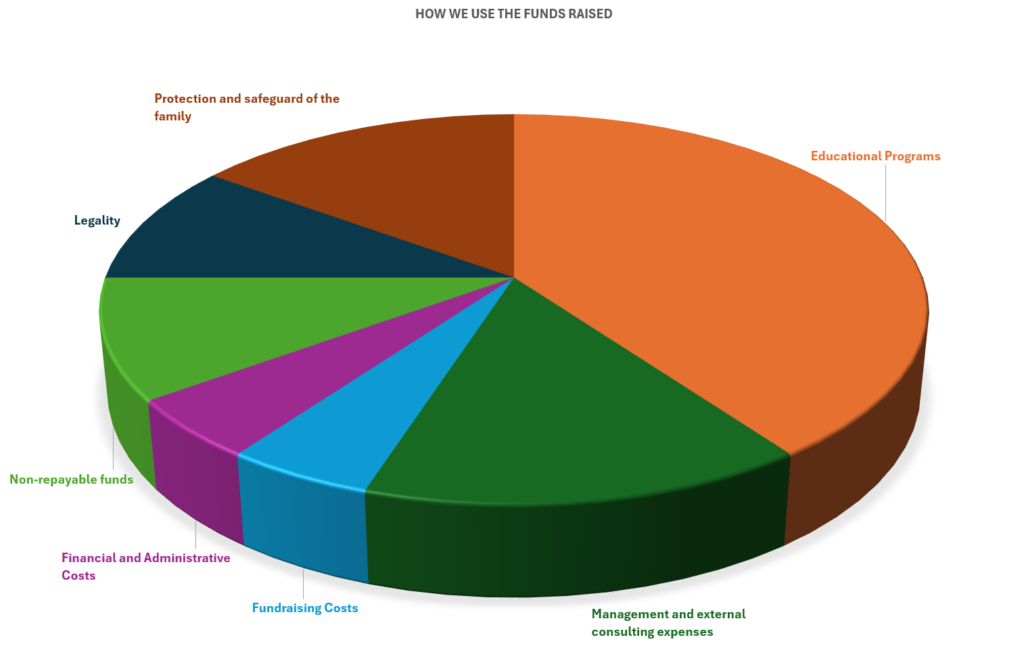
How We Use the Funds Raised
Updated 12/2025 – We ensure that your donations are managed in the best possible way to transform the lives and futures of people wherever we can.
40%
Educational Programs
We consistently educate on healthy lifestyles and provide training and assistance to encourage micro-economy and micro-enterprise.
10%
Non-repayable funds
Funds allocated to support the most vulnerable groups
15%
Management and external consulting expenses
The contributions we collect help us cover management expenses and pay industry professionals or reimburse volunteers who work to carry out our projects.
10%
Legality
We spend part of the collected contributions every year to protect human rights
5%
Fundraising Costs
15%
Protection and safeguard of the family
Every year we direct our resources to support the well-being of the family
5%
Financial and Administrative Costs
We oppose any political compromise.
We categorically reject conditions stemming from governments, states, or multinational corporations that do not respect human rights and the preservation of the planet.
Join us in building a brighter future.
If you’re passionate about making a difference and want to contribute to change, join HumanitarianAssistance. We’re looking for motivated and passionate volunteers who want to commit to the common good. We share the vision of a fairer world, and together we can make it happen.
Use of Funds and Operational Structure
Humanitarian Assistance is the flagship project of the TALLARITA HARRY Humanitarian Entity.
It enables our organization to operate as a functional and organizational humanitarian structure, rather than primarily as a direct aid provider or an entity focused on the immediate material distribution of assistance.
Funds received through contributions, fees, training activities, educational programs, and related initiatives are not predominantly allocated to direct material interventions (such as the construction of wells, distribution of essential goods, emergency housing, or immediate on-the-ground aid). Instead, they are dedicated to supporting the human, organizational, and project infrastructure necessary to design, coordinate, develop, and sustain activities with humanitarian, social, cultural, and educational purposes.
Nature of the Activities
The organization’s main activities include:
- the design and development of initiatives with humanitarian and social impact;
- operational and organizational coordination of educational, cultural, and training programs;
- administrative and logistical management of operational structures;
- training of operators, volunteers, and individuals involved in the activities;
- study, research, documentation, and planning activities;
- organizational and methodological support for humanitarian and social initiatives, including those carried out in collaboration with third parties.
Operational and Mission Costs
Financial resources are used to cover mission-related and operational costs, including, by way of example and not limitation:
- rental and management of operational premises;
- professional fees and collaborations;
- administrative, organizational, and logistical expenses;
- costs related to project design, communication, and coordination;
- subsistence expenses strictly connected to the performance of operational activities.
These costs are considered essential and instrumental to the pursuit of the statutory objectives, as they ensure the continuity, effectiveness, and sustainability of the activities carried out.
Impact and Purpose
The impact of the activities is primarily structural, educational, and project-based, with a medium- to long-term orientation.
The organization contributes to the promotion of human rights, collective well-being, and social cooperation through the development of human and organizational infrastructures, rather than through immediate assistential or relief-based interventions.
This approach is consistent with the operational models adopted by numerous humanitarian organizations, foundations, and international entities working in the fields of cooperation, education, and sustainable development.